
 Deutsch
 Español
 Français
 Italiano
 日本語
日本語 Português
 Suomi
Suomi Svenska
Alone-time training is a challenging process, and it’s completely normal to run into situations where sessions don’t go as planned. For example, your dog may find it hard to relax during a session, may start moving toward the door to wait for your return, or may show other clear signs of stress and restlessness. To some extent, fluctuations in your dog’s skill level are a normal part of any training process. People can’t keep improving their personal best running times day after day, either. Just as progressing in running requires not only tough sessions but also easy base training and recovery, the same principle applies to alone-time training.
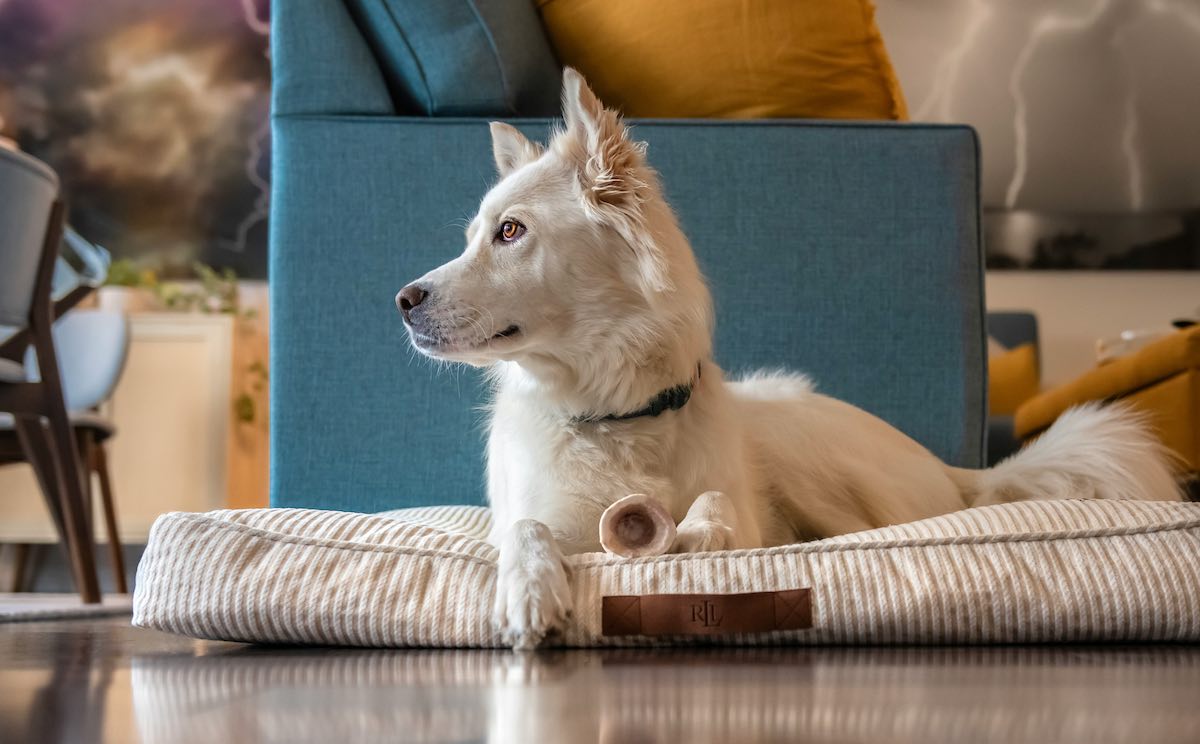
In alone-time training, it’s essential that all sessions are kept below your dog’s reaction threshold so that no signs of stress are visible at all. As soon as difficulties appear, it’s important to temporarily make the sessions easier and consider possible reasons for the restlessness, so that you can respond to them as effectively as possible. There may be one or several factors affecting the training, and potential causes range from training technique to different aspects of the dog’s overall wellbeing.
Health-related challenges
Unfortunately, alone-time problems are often influenced by an underlying health issue which is only noticed when training doesn’t progress as planned. In most cases, it’s worthwhile to look into your dog’s health before starting alone-time training, or at least when you begin. Sometimes, a health problem coincidentally starts to worsen during the training period. Changes in the dog’s health may then manifest as a regression where training that used to go well suddenly no longer works.
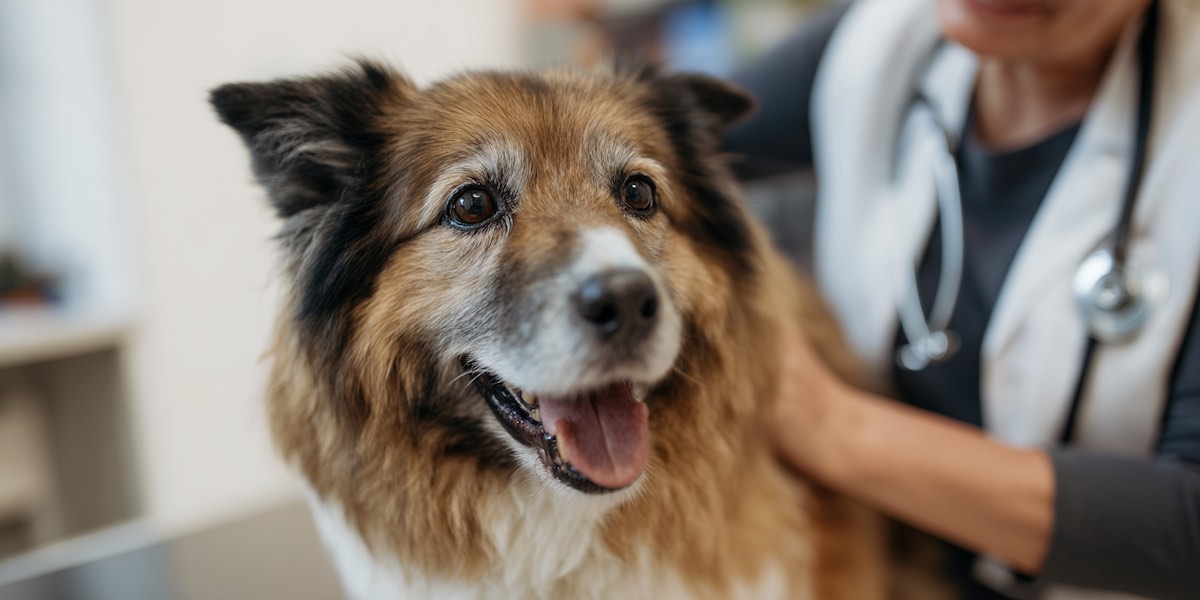
Problems related to diet, gut inflammation, and gastrointestinal diseases, for example, typically cause fluctuations in the dog’s ability to cope with alone time, creating a need to reassess the appropriate training level. In some cases, successful alone-time training simply isn’t possible until the dog’s condition has improved, because many illnesses affect the dog’s physiological ability to cope with a gradual desensitisation process. These include, among others, neurological factors and hormonal imbalances, as well as the psychological effects they cause.
Even if no specific health issues have been diagnosed, you can get valuable clues about your dog’s health and wellbeing by observing their behaviour and body language. At a minimum, consider the following points from the past month: does your dog always eat well and willingly? Does your dog sleep enough, at least 14 hours per day? Is the stool firm and does your dog have regular bowel movements? If your dog is acutely unwell (e.g., has diarrhoea), it’s best to skip training altogether so that the feeling of discomfort doesn’t become associated with the sessions, making them unpleasant. An acute health problem can also affect the dog’s nervous system and physiology in a way that blocks learning, or creates a situation where a training session that would normally help your dog get used to being alone instead sensitises them and makes alone time increasingly difficult. Even if the symptoms don’t clearly point to a particular medical issue but training is proving difficult, it’s always wise to have your dog checked by a knowledgeable veterinarian. That way, you can rule out treatable medical causes that might be standing in the way of progress.
Changes in everyday life
Everything that happens in a dog’s life affects their ability to cope, and sometimes the overall load is simply higher than usual. If alone-time training has recently become more difficult after previously going well, think about whether there have been any changes in your everyday routines. For example, after a lively and activity-packed weekend away, your dog’s nervous system may be highly charged. Contrary to what people often assume, a tired dog may actually be more sensitive during training. The reasons have to do with hormone function: both pleasant and unpleasant arousing events affect it similarly. Examples include too little sleep during a holiday, repeated high-intensity exercise, more off-leash outdoor time than usual, and play with other dogs. After a holiday, your regular training routine may also have been disrupted, and you may need to return to an easier level for a while.
High-arousal hobbies and sports are fun, but they also increase stress hormone levels, which raises your dog’s overall load and lowers the threshold for stress reactions. In addition to stimulating scenarios, other everyday changes can have an impact, too: for example, a business trip or an especially busy work week for a primary caregiver may have reduced the amount and quality of social interaction your dog is used to. In these situations, the primary solution is to restore normal routines and support the dog’s recovery by ensuring sufficient rest and suitable enrichment. Two training-free rest days per week are an essential part of alone-time training for every dog. On top of that, everyday exercise and activities should support your dog’s wellbeing without causing fatigue or overarousal.
Irregularities in the training routine
An alone-time session can suddenly become more difficult than usual if something out of the ordinary happens in that particular session. Keeping a training log helps you understand what is typical for your dog from their point of view.

You can compare a given session to previous ones and look for patterns that connect successful and unsuccessful sessions. For example, today’s session may have taken place at a different time of day than usual, or training might be more difficult with a different family member. Did something unusually stressful happen just before the session, such as another person leaving a moment earlier? Have you recently added departure cues to the training or reduced the number of warm-up repetitions?
Challenges may also arise if you are training too many criteria at the same time. For instance, you shouldn’t introduce departure cues and remove warm-up repetitions in the same phase, nor do either of these while you’re also trying to increase the length of your absences.
Appropriate training level and plans
Apart from hidden health problems, the most common cause of difficulties in alone-time training is inappropriate training technique: it’s very easy to work at a level that is too difficult, to repeat sessions that are too similar, or to do too few really easy sessions. When you’re hoping for results and urgently need them, it’s completely understandable to instinctively focus on practising the very thing that feels difficult. In alone-time training, however, it’s more important to practise what is easy, just like base training in running. Repeating sessions that are even slightly too difficult slows down progress and can even block it entirely.
Once the correct training level has been carefully defined, all actual training should take place within your dog’s comfort zone. The length of the sessions is then varied at the right moments so that easy, medium, and more challenging repetitions and sessions alternate. The most challenging sessions should be done only once a week, and all the other sessions should be medium, easy, or very easy. How you structure and layer your training also matters a lot: if sessions follow too rigid a pattern, your dog may learn to predict how long they are going to last. Training weeks shouldn’t repeat in the same order, and the number and order of warm-up repetitions within each alone-time session should also vary from day to day. Determining the right level and designing effective yet safe training plans is detailed and demanding work, and support from an experienced trainer is often indispensable.
Troubleshooting checklist for alone-time training
- Check that all training has taken place strictly within your dog’s comfort zone. Never train a dog that is already stressed.
- Review your previous sessions and make sure you have done more easy sessions than those close to your dog’s current limits.
- Make sure you are not repeating the same pattern day after day. Sessions should clearly differ from one another; for example, the sequence of repetitions should not always be the same.
- Look closely at the structure of your sessions: are you truly working on only one element at a time? Besides the absence itself, it’s best to include at most one departure cue in a session until that cue is fully trained. This prevents different triggers from "stacking up" and suddenly overwhelming your dog.
- Make sure your dog has days off. Every dog needs two training-free days per week, preferably consecutive.
- Examine your recent training history. Have you made things easier or offered extra days off as soon as your dog started to hesitate during sessions, or have you accidentally moved on to exercises that were too difficult or followed a negative experience with a demanding session too quickly?
- Think about your dog’s daily routines: have there been major life changes, or has the usual time of day for training shifted?
- Assess whether training goes equally well with every family member, or whether different people need different difficulty levels.
- Consider what has happened in the past few days. Has your dog been living a highly active, high-arousal life, for example, running a lot, roughhousing, or experiencing frightening situations? If life has been stressful recently, in a good or a bad way, give your dog several days to recover before continuing training.
- Always take a critical look at your dog’s health, is it possible that something has gone unnoticed?
In conclusion
It’s not worth drawing conclusions about your dog’s future ability to learn based on a single unsuccessful session, even though the situation understandably feels heavy. A dog’s nervous system often recovers well; the key is to avoid repeating difficult sessions over and over. Give your dog and yourself a couple of rest days, then return to training at a level you are confident will be easy. Do several easy sessions in a row so you can see that they are consistently successful, not just one-offs. After that, you can start to very cautiously increase difficulty by sprinkling in more challenging sessions among the easier ones.
If difficulties persist, it’s always advisable to contact a trainer who has specific education and experience in treating separation anxiety. With the support of an experienced professional and high-quality training plans, it is possible to work through even the most challenging phases of training.